Have you ever wondered how Genoa salami is different from hard salami? These delicious cured meats differ in terms of origins and characteristics. Keep reading to learn about Genoa Salami vs. Hard Salami.
Most importantly, there is quite a contrast between authentic salami that gets imported from Italy and mass-produced salami. As soon as you enter an Italian charcuterie, you can easily see, smell and feel the difference!
Hard salami and Genoa salami can be used in a variety of ways including sandwiches, appetizers, cheese boards, pasta and more. This article will compare the ingredients, texture, production process, flavor, origins, and more between these cured meats. Let’s begin!
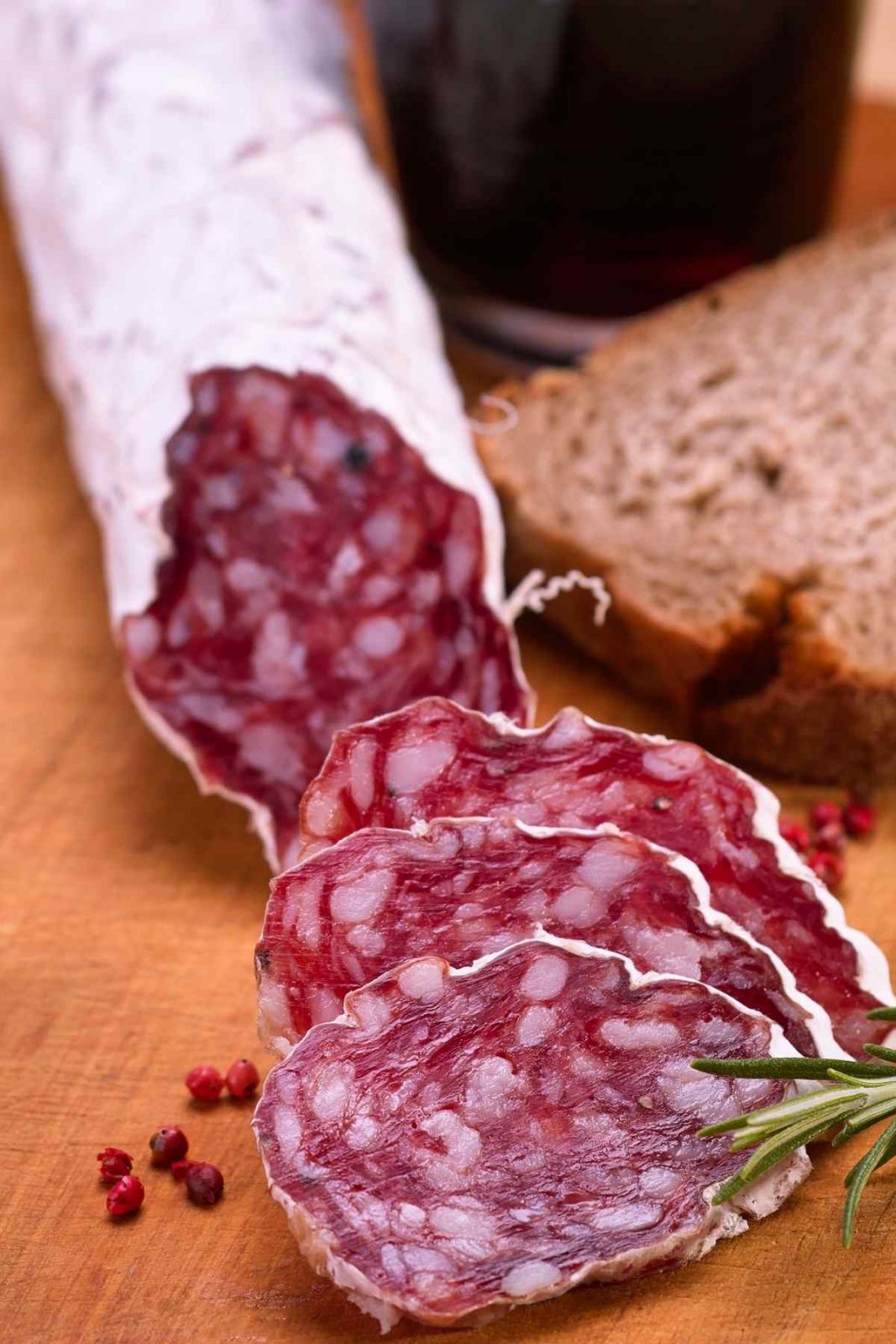
Table of Contents
What is Salami?
Salami is a type of sausage that gets cured, fermented and air-dried. They have a signature marbled appearance that consists of specks of fat distributed throughout the meat. When handmade, the fat appears in clusters, whereas machine packing gives it a more even distribution.
Salami was typically made from various types of meat such as pork, beef (or veal), venison, or poultry. The meats could be either all alone or combined with other meats. Their flavor is often enhanced with several spices, garlic, and herbs. Depending on the process used to make them, different kinds of salami are available. While salami is not cooked, they have been cured meaning they can be consumed “raw”.
What is Genoa Salami?
Genoa salami is dried, salted, spiced, and naturally fermented. Authentic Genoa salami consists of raw pork (40% fatty and 60% lean) as well as equal parts lean beef meat (or formerly mule). It has a distinctive smell and is considered to be a traditional product of agriculture. Since it does not have a PDO designation, it is allowed to be produced anywhere in the world and not only the region from which it originates.
What is Hard Salami?
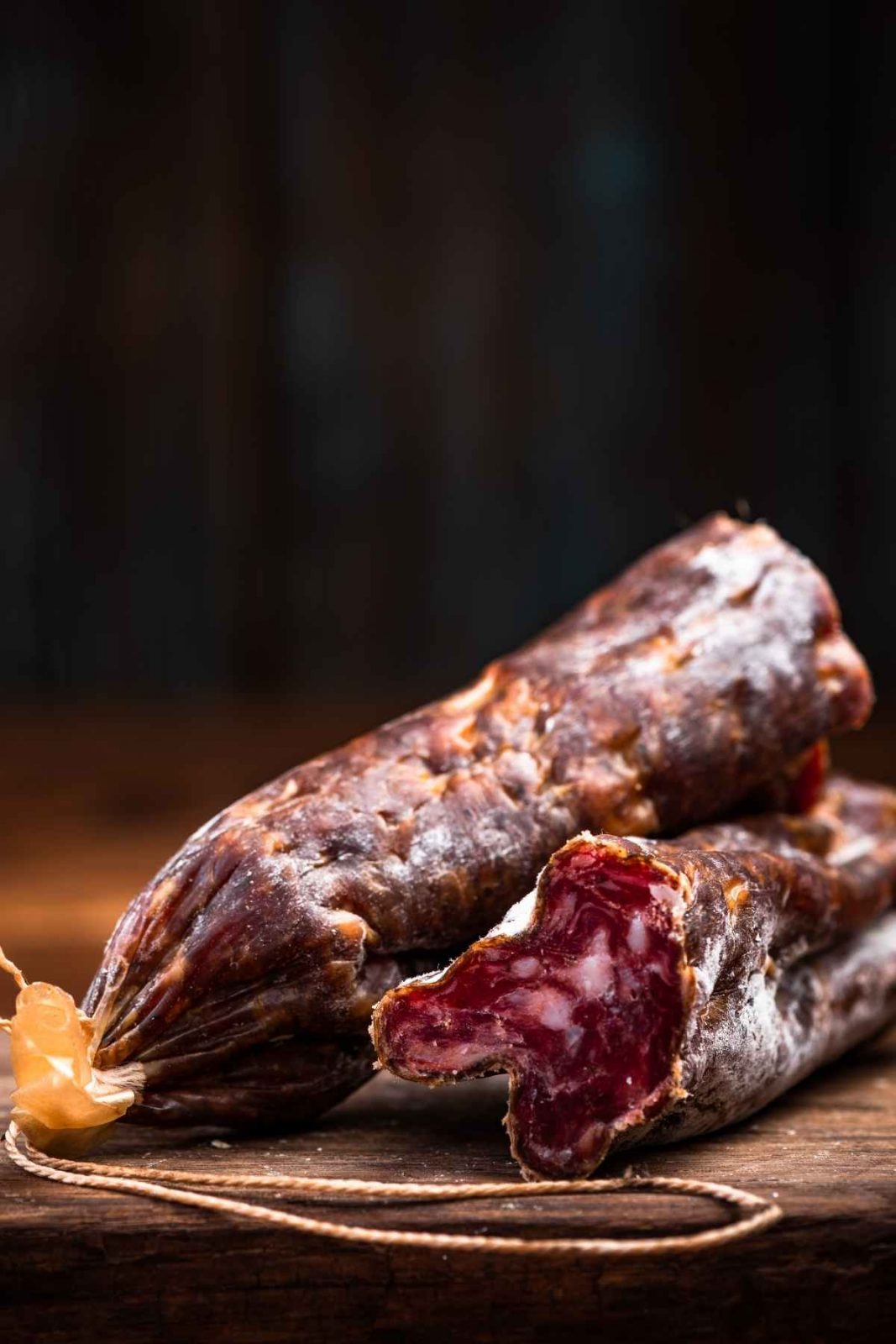
As suggested by the name, hard salami is firm in consistency and is also cured. It is firmer and drier than Genoa salami, has a marbled appearance and is a bit chewy. It originates from Germany so it is not related to Italy at all.
Differences Between Hard Salami Vs. Genoa Salami
Origin
Both of these salamis can currently be produced in the USA but Genoa salami originates from the hinterland of Genoa, a hilly region in Italy where pigs have a diet of chestnuts, acorns and hazelnuts. On the other hand, varieties of hard salami have origins throughout Germany.
Meat Used
Hard salami is either produced solely of ground beef or is made of beef and pork combined (more beef than pork). USDA-FSIS rules state that Genoa salamis produced in the US must have a specific moisture to protein ratio (less or equal to 2.3 to 1) and should have pork as the predominant ingredient.
Texture
Both salamis are considered to be dry sausages with a firm texture. Hard salami is drier and more firm than Genoa salami and is a bit chewy. Genoa salami has a high fat content which accounts for its greasy texture.
Color
Hard salami is slightly darker in color compared to Genoa salami because of its higher proportion of beef.
Flavor
Garlic and spices are added to both of the salamis to enhance the flavor. Its fermented flavor is a result of the wine that is used in the production process. This type of salami is most often smoked.
The flavor of Genoa salami is very distinct and it has a smoky aroma. Unlike fresh or cooked types of salami that are soft in consistency, this one is dry-cured and more firm. However, in comparison to hard salami, its moisture makes its a bit softer.
Shelf Life
Regarding shelf life, and in accordance with the USDA, any unopened type of dry or hard sausage can be stored for up to six weeks in the pantry or indefinitely in the fridge. Once open, it can be refrigerated for up to 3 weeks.
Production

Genoa salami is produced differently than other Italian salamis. The meat is first cut manually after the tendons and cartilage are removed. Then, only the lean parts are passed through the meat in order for the fatty parts to be visible.
The ingredients used in the commercial production of both the salamis are exactly the same. They consist of pork or beef, salt, dextrose, 2% (or less) of flavorings, lactic acid starter culture, sodium nitrite, sodium ascorbate (vitamin C), BHA, BHT, and citric acid.
Genoa salami contains certain spices such as white peppercorn that cannot be found in hard salami. The salamis are smoked in special rooms with either oak or chestnut wood for a few days. Lastly, they must be air-dried at a specific temperature and specific levels of humidity for 2-3 months before they are ready to be consumed.
Ways to Eat Genoa Salami
Although Genoa salami makes for a tasty and hearty sandwich or even on its own as an appetizer, there are plenty of other ways to enjoy this deli salami. It provides a delicious dimension to any tomato sauce (as well as carbonara pasta sauce) and is great to use as a stuffing or topping on dishes other than just calzones and pizza.
It can be nicely combined with potatoes and goat cheese to make a frittata as a quick and easy dinner. For breakfast, fried salami works great on top of scrambled eggs. It is also a nice addition to salads, roll-up snacks, and macaroni recipes.
When serving salami, it is usually best to cut thick slices or at least thick enough that they are able to stand on their edge. However, a thin slice is better to slowly savor the salami without overwhelming your palate.
You May Also Like

Genoa Salami vs. Hard Salami (Salami Sandwich Recipe)
Ingredients
- 1 bread
- 2 tablespoons Caponata or your favorite sauce
- 1 cup arugula
- 1 slice tomato
- 1 slice cheese
- 1-2 pieces salami
- fresh basil
Instructions
- Halve the bread horizontally. Toast them in the toaster.
- Spread Caponata on top of half of the bread.
- Add arugula, tomato slice, cheese, salami and basil. Slice, and serve.
Leave a Reply